
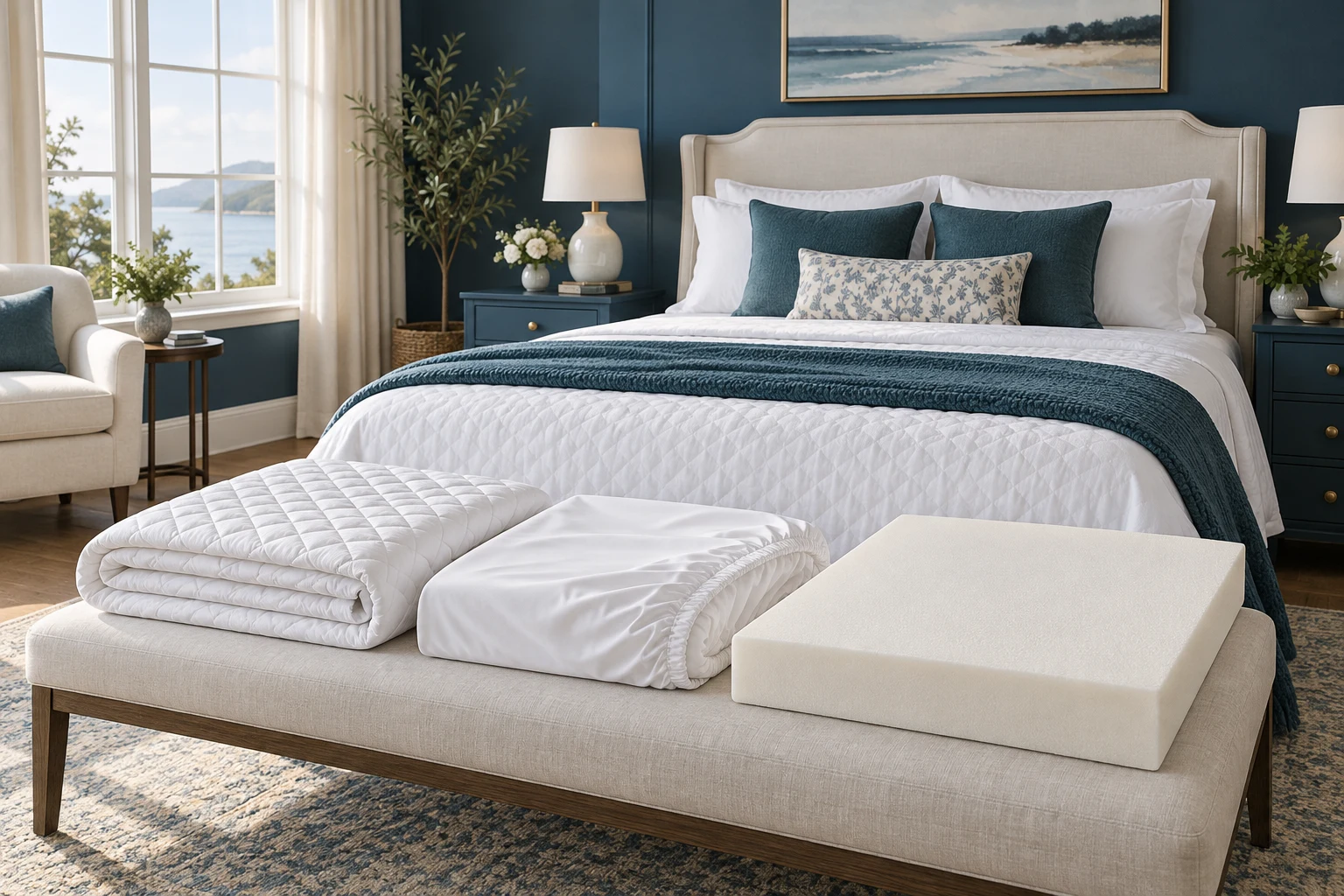
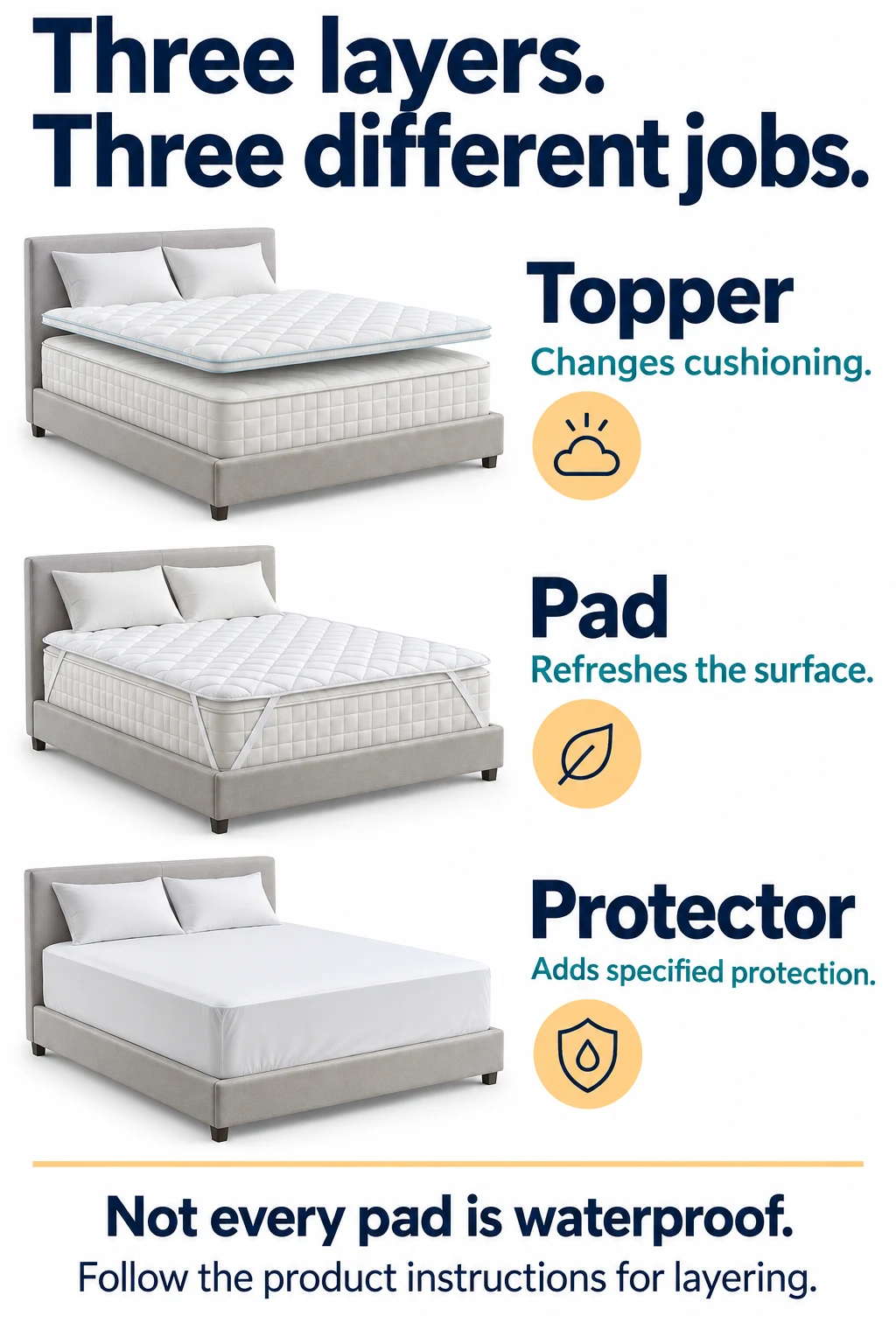
Choose a topper to change cushioning, a pad for a lighter surface refresh, and a protector for a stated protective function. Product names overlap, so read the construction and care instructions rather than trusting the category name. A quilted pad can also be waterproof; a topper is not automatically a spill barrier.
The practical question is what is missing from your current bed. If the mattress feels right and you only want spill protection, adding a thick comfort layer solves a different problem. If the mattress feels too firm, a thin barrier is not a substitute for cushioning. This is a researched category guide, not a test of waterproofness or comfort.
Compare the job each layer does
| Layer | Main reason to consider it | What the label does not establish | Check before ordering |
|---|---|---|---|
| Topper | A more noticeable change to the comfort surface | Waterproofness, structural repair or a specific firmness | Material, depth, cover, attachment and return terms |
| Pad | A lighter quilted or filled surface refresh | Enough depth for a major comfort change | Fill, quilting, fitted skirt and washing instructions |
| Protector | The protection named in its specification | That all models block liquids, allergens or bed bugs equally | Barrier type, coverage, seams, fit and care limits |
| Combination product | Two functions in one item | That either function matches a separate specialist product | Which claims apply to the complete item |
Nectar's category explanation distinguishes these roles while noting their overlap. The useful buying lesson is to map the claimed function to your actual problem, not to treat the labels as standardized performance grades.
Start with one of four situations
The mattress is comfortable and you want easier spill cleanup. Start with a protector explicitly described for liquid protection. A fitted top protector and a zippered encasement cover different areas. If you need full encasement, inspect the actual coverage and closure; a skirt around the mattress is not the same thing.
The surface feels tired, but the underlying mattress is still suitable. A washable pad may provide the light refresh you want. Compare the fill and quilting with your laundry capacity. More loft on the product photo does not establish how it will feel under a sleeper or after washing.
The mattress is flat but too firm. Investigate a topper's material, firmness and depth. Read the latex versus memory foam topper comparison and two-inch versus three-inch guide before choosing a product. A pad's softer fabric surface may not provide the larger adjustment you are looking for.
There is a persistent hollow, unstable support or unresolved mattress return. None of these accessories repairs the core or frame. Use the topper or new mattress tool, and check the original purchase deadline before adding more layers.
What order should the layers go in?
There is no universal stack that overrides product instructions. A fitted sheet normally provides the washable sleeping surface. Under it, choose the minimum combination that delivers the needed comfort and protection while fitting securely.
If you want a barrier to protect both the topper and mattress, it must be suitable for that arrangement and deep enough to fit around the combined height. A mattress-only encasement underneath a topper protects a different object: it leaves the topper outside the enclosure. Some systems specify a particular cover or sequence. Follow those instructions rather than assuming that every protector belongs in the same place.
Do not automatically add a pad over a topper. It introduces another filled surface and can change the very feel you selected. Similarly, stacking several tight fitted layers may pull at the corners. Start with the required functions and add another layer only when it has a clear purpose.
Fit and care are part of the comparison
Measure mattress height plus any topper and substantial pad. Compare the total with the fitted item's stated range, then check the corner fit. Allow for the product's actual elastic and shape rather than expecting a nominal pocket depth to describe every installation.
Read the label for washing temperature, drying method and prohibited products. Waterproofness claims do not make every care routine acceptable. Check the foam and removable cover separately: a washable cover does not imply washable foam. Linenspa, for example, specifies spot cleaning for its memory foam topper.
For practical cleanup and inspection steps, use our maintenance checklist. Avoid using an accessory as proof that a warranty claim will be accepted; mattress and accessory warranty conditions remain separate documents.
Do not buy a cooling promise without identifying the function
A cool-feeling fabric, a waterproof membrane and a thick comfort layer address different things. Adding a product marketed as cooling may also change cushioning or the barrier between you and the mattress. We have not measured the thermal performance of these combinations.
If the current mattress feels right, preserve that baseline while investigating bedding and protection. If you need a comfort change as well, compare the cooling topper guide with realistic expectations. Choose the protector shortlist for protection, or return to the general topper guide for a deliberate cushioning change.
Choose your next step
Talk through the tradeoffs
Open an editable question in the Sleep Advisor. Nothing is sent to AI until you submit it.