
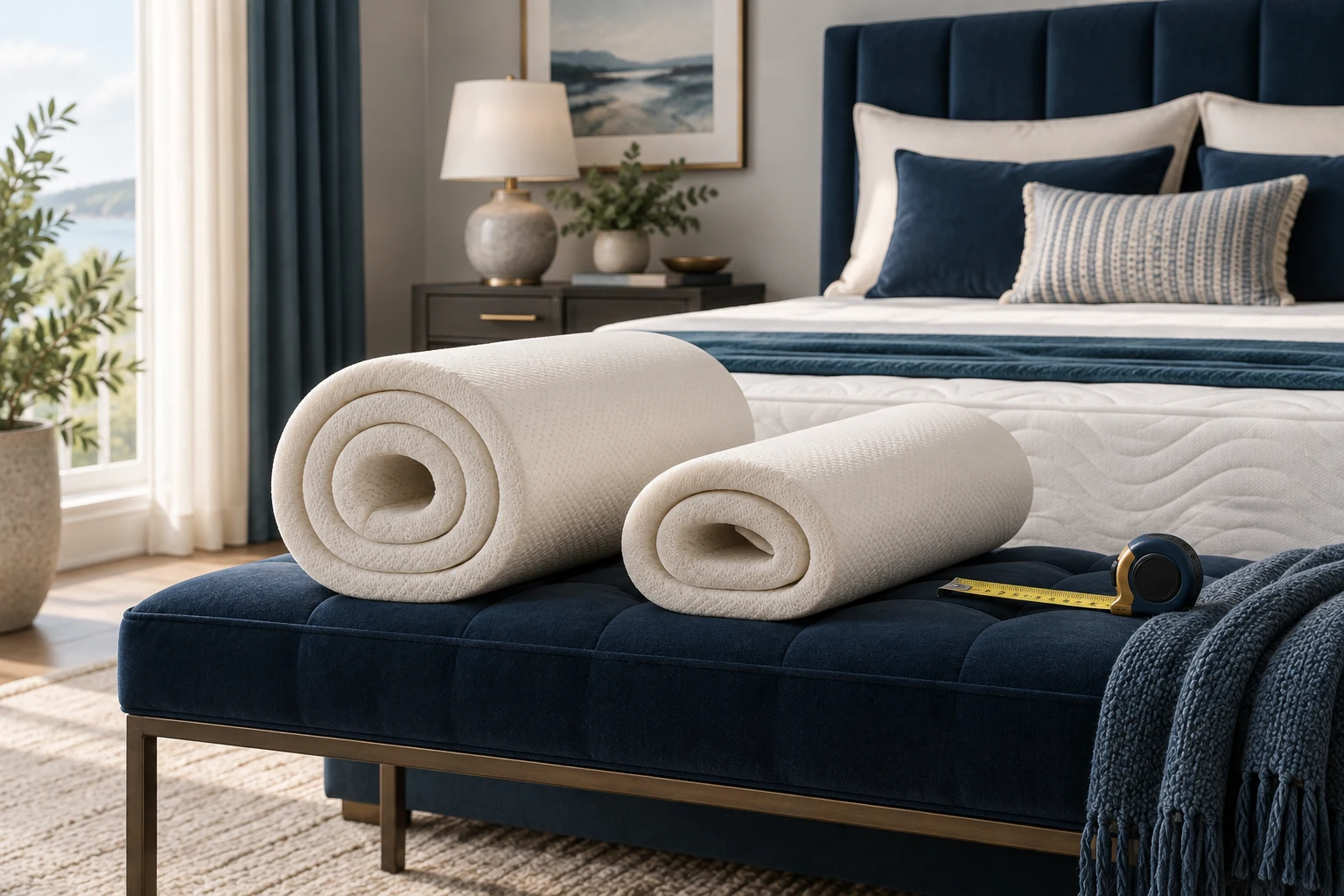
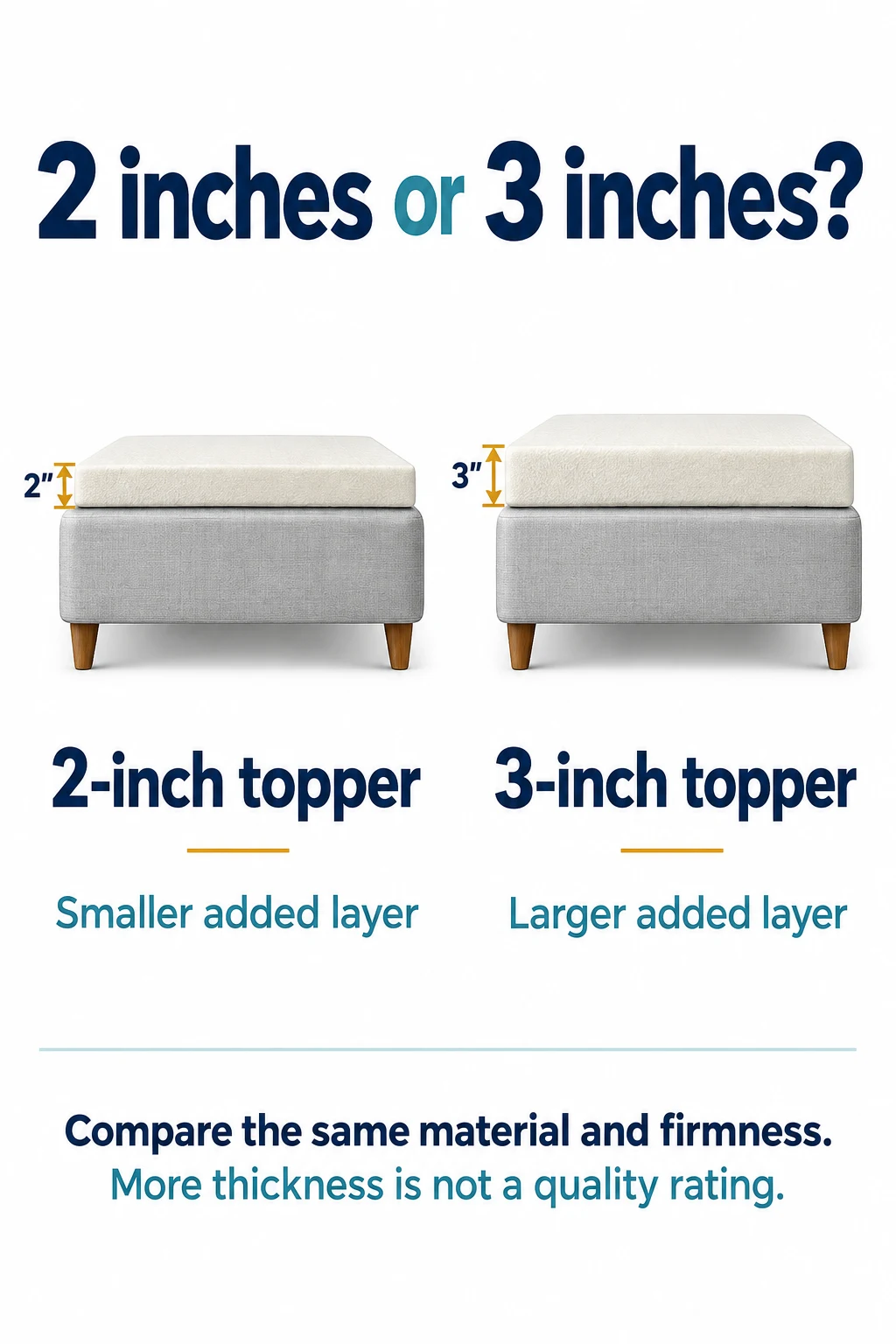
A two-inch topper adds a smaller comfort layer; a three-inch topper adds more material between you and the existing mattress. The thicker option is not automatically softer, more supportive or better quality. Compare the same material and firmness before using thickness to decide.
Two inches is 5.08 cm and three inches is 7.62 cm. The extra inch means 50% more nominal depth, not 50% more comfort or support. This guide explains the choice for a sound existing bed, without inventing a body-weight cutoff or claiming that we tested these configurations.
Start with the mattress underneath
Check the bed without its topper. Is the surface flat? Is the foundation intact? Does the mattress have a persistent depression, or does it simply feel firmer than you prefer? A larger comfort layer does not repair a damaged support system.
If you are unsure which problem you have, use the topper or new mattress tool first. During an active mattress trial, compare an accessory purchase with the original order's return conditions before the deadline passes. A topper should not become an expensive way to postpone an unresolved mattress return.
Compare two and three inches on equal terms
| Question | Two-inch route | Three-inch route |
|---|---|---|
| How much new material do you want? | Smaller added layer over the original surface | Greater added depth between you and the mattress |
| Is the original bed close to comfortable? | Worth investigating for a more limited adjustment | May be more change than you intended |
| Do you want a more substantial cushioning change? | Check whether the available depth is enough | Worth comparing, provided the resulting feel still suits you |
| Is sheet fit already tight? | Adds less unloaded height | Requires an additional inch of pocket allowance |
| Is getting on and off the bed difficult? | Smaller height change | Recheck the higher surface and edge behavior |
Manufacturer depth guidance is a starting point
Sleep On Latex describes its two-inch option as a moderate change and its three-inch option as a more significant change. Those descriptions help frame the decision within that product family; they are not a universal comparison across every foam and firmness.
For example, switching from two-inch Soft latex to three-inch Medium latex changes two variables. Switching to memory foam changes another. Use the latex versus memory foam topper comparison to choose the material response first, then compare depth within an appropriate firmness range.
The Linenspa topper range is a separate memory foam example. Do not transfer another manufacturer's firmness descriptions or an owner's experience with a different formulation to it.
Three scenarios that make the choice clearer
The mattress is nearly right, but the surface is a little firm. A smaller adjustment is a sensible route to compare. That does not guarantee two inches will work: the chosen firmness still matters. Write down what you want to improve rather than ordering the thickest available version by default.
The mattress feels substantially too firm, but its support is sound. Three inches provides more new comfort material to evaluate. Watch whether the change also creates an unwanted sinking sensation or makes turning harder. The side-sleeper topper guide can help you compare products after defining those priorities.
There is a hollow, unstable base or recurring roll-together problem. Neither depth is the structural repair. Investigate the mattress and base, and preserve any applicable return or warranty route. There is no meaningful thickness recommendation until you identify what is failing.
Measure the complete bed, not just the foam
Add the mattress height, unloaded topper depth and any substantial quilted layer when checking fitted-sheet capacity. A listed pocket depth is not a promise of a secure fit on every combination of elastic, corner shape and fabric. Check the sheet maker's fit guidance and whether corners remain secure in use.
Sit at the edge and check access to the floor. A taller bed and a softer sitting edge can change getting in and out in different ways. Do not infer edge stability from nominal topper depth alone.
Reassess the pillow after changing the sleeping surface. If your shoulder settles differently, the previous pillow setup may no longer feel the same. Use the pillow loft calculator as an adjustable starting point, not a clinical measurement.
On a split king, decide whether the halves must move independently. A single topper across two independently articulating mattresses can interfere with that arrangement. Follow the mattress and adjustable-base instructions, and compare separate toppers where independent movement is required.
A useful at-home comparison
Keep sheets and pillow consistent for the initial comparison, then change one remaining variable at a time. Assess the original comfort issue, freedom to turn, edge access and sheet fit. Record the seller's actual trial conditions, return shipping responsibilities and deadline before opening the product.
An owner question about whether two and three inches feel different illustrates why depth alone cannot settle the purchase. The relevant comparison includes the starting mattress, material and firmness. That discussion is question discovery, not proof that a particular depth works for a particular person.
Avoid buying two layers merely to simulate one thicker product. Interfaces, covers and movement between layers introduce further variables. Choose a configuration designed for the intended use, then compare it with the general topper shortlist or latex configurations.
Choose your next step
Talk through the tradeoffs
Open an editable question in the Sleep Advisor. Nothing is sent to AI until you submit it.