
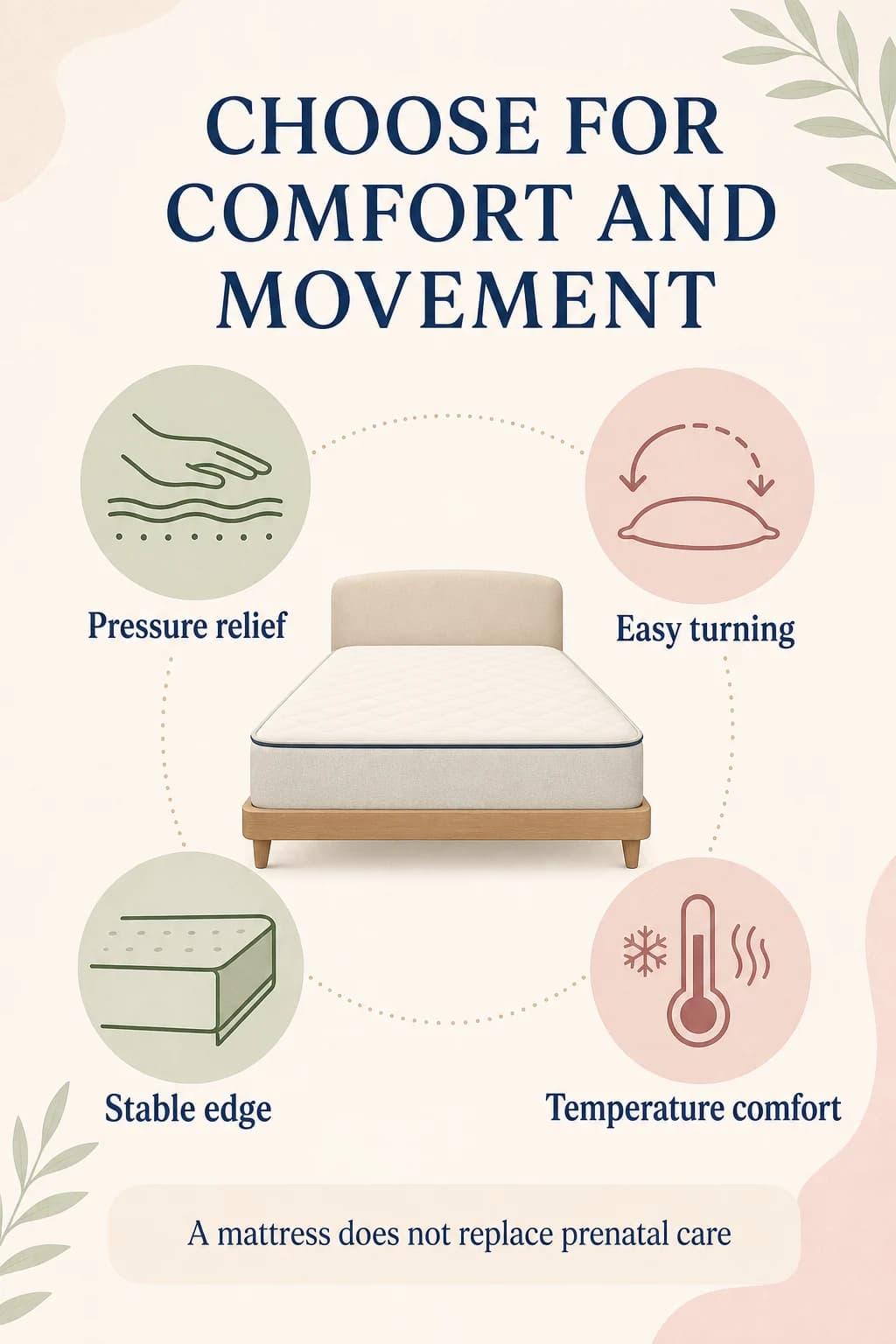
The best mattress for pregnancy is not the softest bed or a product marketed as “maternity.” For many sleepers, the best starting point is a responsive medium or medium-firm hybrid: enough cushioning for a side-lying shoulder and hip, enough pushback to turn without fighting the mattress, a stable edge for getting up, and a feel both partners can keep using after pregnancy.
Our best balanced research pick is Leesa Sapira Hybrid. Saatva Classic is the strongest access-and-edge option, Tuft & Needle Mint Hybrid is the responsive pressure-relief route, and Puffy Lux is the plush route. None is a medical recommendation, and no mattress prevents pregnancy complications.
Medical boundary
This article covers mattress comfort, not prenatal diagnosis or treatment. Contact your prenatal care team about severe or sudden pain, dizziness, shortness of breath, bleeding, contractions, decreased fetal movement, persistent insomnia, or any symptom that concerns you.
How we reviewed pregnancy-friendly mattresses
We reviewed current construction, pressure-relief design, responsiveness, edge stability, mattress height, delivery, trial terms, and how well each model could serve two adults beyond pregnancy. We used ACOG sleep-position guidance to separate comfort advice from medical claims.
We did not conduct a clinical trial, assess blood flow, measure fetal outcomes, test chemical exposure in a laboratory, or have one pregnant reviewer stand in for every trimester and body. We therefore do not assign medical safety ratings, promise pain relief, or call one material universally safe.
Pregnancy sleep position: what current guidance actually says
ACOG says sleeping on the side during the second and third trimesters may be best as the belly grows. Lying on the back can put the uterus's weight on the spine and back muscles and may compress a major blood vessel, potentially causing dizziness and reducing blood flow. ACOG suggests bending one or both knees and using pillows between the knees or under the belly.
The important correction is that left-side-only messaging is too absolute. In a February 2026 review, an ACOG obstetrician wrote that either the right or left side can be used and that people who wake on their back should not panic—just turn to one side or the other. A mattress should make that side position comfortable; it does not determine medical risk.
Mattress shortlist by practical need
| Starting point | Why it may help comfort | Main caution |
|---|---|---|
| Leesa Sapira Hybrid | Balanced cushioning, responsive coils, airflow, and easier turning | Medium feel is not ideal for every lighter or pressure-sensitive side sleeper |
| Saatva Classic | Stable perimeter, three comfort choices, in-room delivery and setup | More bounce; taller profiles can make the bed too high when paired with a tall frame |
| Tuft & Needle Mint Hybrid | Responsive pressure relief, coils, and easier movement than slow foam | Verify the exact current model and retailer trial |
| Puffy Lux Hybrid | Plush contouring with coil support for pressure-sensitive sleepers | Deep cushioning may feel warm or make repositioning harder for some bodies |
Best balanced starting point: Leesa Sapira Hybrid
The current Leesa Sapira Hybrid combines foam layers with individually wrapped coils. That gives it a more responsive surface than deep all-memory-foam beds while still providing side-sleeping cushioning. For a couple, the hybrid construction also offers a reasonable compromise between pressure relief, edge use, airflow, and movement.
The main risk is choosing “medium” by label without considering body weight. A lighter side sleeper may not compress it enough at the shoulder; a higher-weight sleeper may compress it too deeply at the pelvis. Test shoulder pressure, hip support, and the effort required to roll or sit up.
Research Leesa Sapira Hybrid
Confirm model generation, seller, trial, warranty, return channel, mattress height, and current foundation requirements.
Before checkout
Use the listing as the source of truth for current price tier, seller, delivery window, and return terms.
Prices, coupons, availability, shipping, and return terms change often. Confirm current details on Amazon before purchase. As an Amazon Associate, we earn from qualifying purchases.
Best for edge support and setup: Saatva Classic
Saatva Classic is a useful route when a stable sitting edge and in-room setup matter more than motion isolation. Its current product page offers multiple comfort choices and heights. That choice is practical, but it creates a measurement task: combine the mattress, base, and frame heights before ordering. A high bed can be as awkward as a low, collapsing edge.
Saatva's direct trial currently includes a pickup processing fee. Adjustable bases are excluded from the mattress trial, so do not treat a mattress-and-base purchase as one reversible bundle.
Compare Responsive Hybrids with Stable Edges
Saatva is primarily direct-to-consumer; verify seller, delivery, setup, fees, trial, and warranty for any marketplace alternative.
Before checkout
Use the listing as the source of truth for current price tier, seller, delivery window, and return terms.
Prices, coupons, availability, shipping, and return terms change often. Confirm current details on Amazon before purchase. As an Amazon Associate, we earn from qualifying purchases.
Best responsive pressure-relief route: Tuft & Needle Mint Hybrid
The current Mint Hybrid uses responsive foam, microcoils, and pocketed coils. This is the type of construction to compare when a slow memory-foam hug feels difficult to turn on but a traditional firm spring bed creates pressure at the hip.
Tuft & Needle's retailer rules illustrate why channel matters. The brand currently says Amazon mattress orders receive a 100-night trial but the return must go through Amazon. Save the exact listing and return instructions before delivery.
Research Tuft & Needle Mint Hybrid
Check the exact model, seller, mattress height, trial, return route, warranty, and whether the current feel remains easy to turn on.
Before checkout
Use the listing as the source of truth for current price tier, seller, delivery window, and return terms.
Prices, coupons, availability, shipping, and return terms change often. Confirm current details on Amazon before purchase. As an Amazon Associate, we earn from qualifying purchases.
Best plush route: Puffy Lux Hybrid
Puffy Lux is for shoppers who know a medium surface still feels too firm at the shoulder or hip. Its plush hybrid design can provide deeper contouring while coils retain more movement and edge structure than a comparable all-foam bed.
Plush is not automatically pregnancy-friendly. If the pelvis sinks much more than the rib cage, or the sleeper has to push hard to roll, the extra contouring has become a mobility cost. Puffy's direct 365-night trial requires at least 30 nights and has household limits; retailer rules can differ. Our Puffy mattress review covers the current lineup.
Research Puffy Lux Hybrid
Verify model generation, seller, trial eligibility, warranty, return process, and whether plush contouring still allows easy movement.
Before checkout
Use the listing as the source of truth for current price tier, seller, delivery window, and return terms.
Prices, coupons, availability, shipping, and return terms change often. Confirm current details on Amazon before purchase. As an Amazon Associate, we earn from qualifying purchases.
How firmness and body weight change the choice
Firmness labels are not standardized across brands. “Medium-firm” can feel very different depending on foam response, coil zoning, quilting, and body weight. Use the label only as a starting point.
Lighter sleepers
Lighter side sleepers often compress comfort layers less and may feel more shoulder pressure. A softer surface or a modest topper can be more practical than replacing a structurally sound mattress.
Mid-range body weights
A responsive medium or medium-firm hybrid is the broadest starting point. Test whether the shoulder sinks without the pelvis drifting downward and whether changing sides remains easy.
Higher body weights
Look for a published support range, reinforced perimeter, thicker support unit, and responsive comfort layers. Avoid relying only on mattress height or the word “firm.” Our higher-weight mattress guide explains the structural differences.
The edge and bed height matter more than marketing admits
Pregnancy can make a previously acceptable bed awkward to enter or leave. Sit where you normally get up. Your feet should reach the floor without sliding off a sharply collapsing edge, and you should be able to stand without climbing out of a deep foam crater.
Measure:
- floor to top of frame;
- base or foundation height;
- mattress height;
- any topper height.
Handles help with rotating a mattress but are not designed to support body weight. Bed rails or mobility aids should be discussed with an appropriate professional and installed according to their safety instructions.
Temperature and materials without false safety claims
Hormonal and body changes can alter temperature comfort. Coils, breathable covers, lighter protectors, and less insulating bedding can help, but “cooling gel” does not establish a measured overnight temperature benefit. See our hot-sleeper guide for setup factors beyond the mattress.
Do not use CertiPUR-US as prenatal medical clearance. CertiPUR-US tests flexible polyurethane foam against defined content, emissions, and durability criteria. It does not certify the finished mattress, every textile, adhesive, fire barrier, or suitability for an individual pregnancy.
New foam products can have an odor. Ventilate the room and follow the manufacturer's expansion guidance. Odor intensity alone does not identify toxicity, and “no smell” does not prove a complete materials profile. Our mattress off-gassing guide separates odor, VOC claims, and certification scope.
Build the sleep setup before replacing the mattress
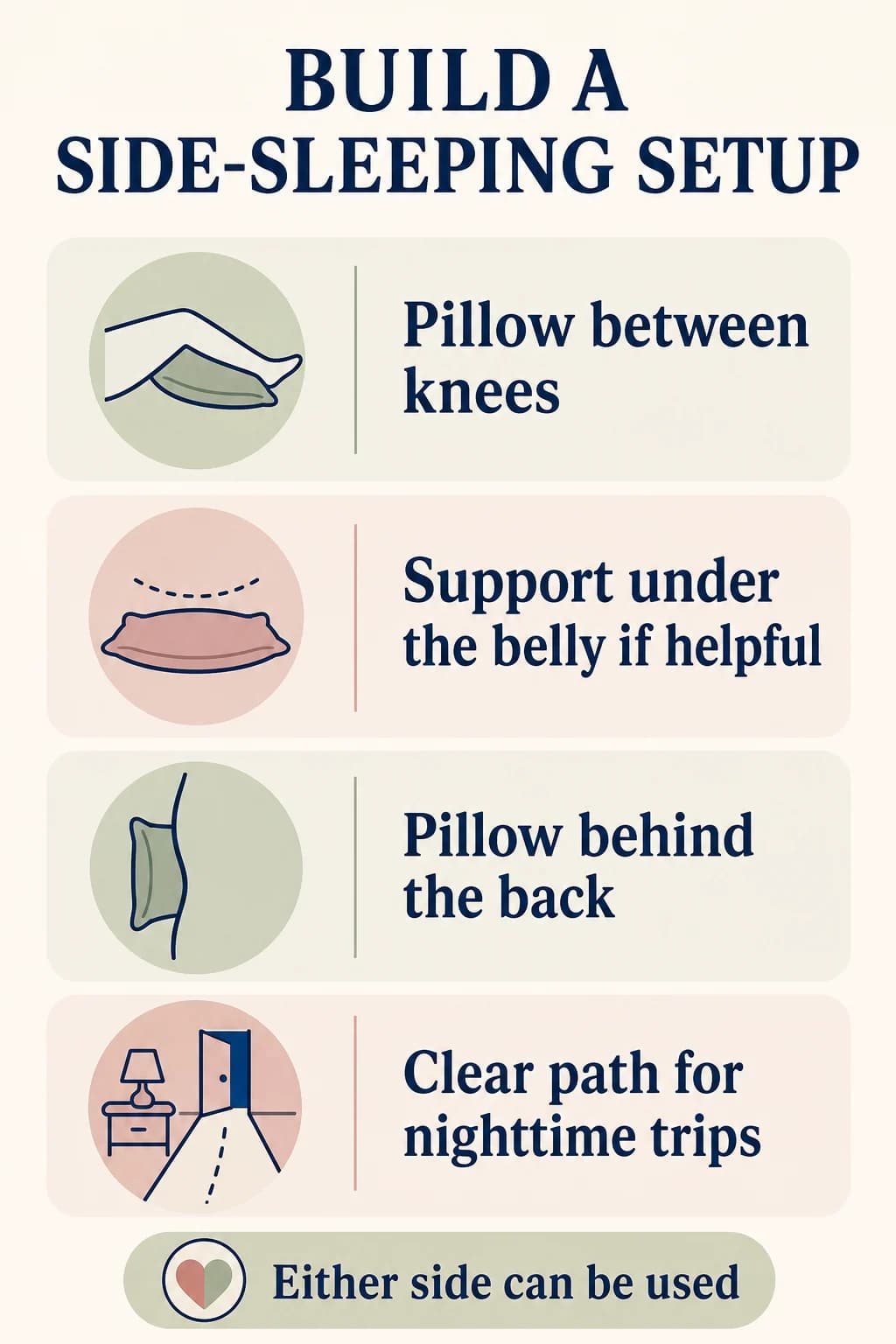
ACOG suggests pillows between the knees and under the belly. A pillow behind the back can make a side position feel more stable, and a clear bedside path reduces nighttime obstacles. Either side can be used unless the prenatal care team advises otherwise.
Try the low-cost fixes first when the mattress is structurally sound:
- add a pillow between the knees;
- place a small pillow under the belly if comfortable;
- use a pillow behind the back for positional support;
- switch to lighter, breathable bedding;
- correct a flexing or poorly supported foundation;
- add a modest topper only if the surface is too firm, not sagging.
When to replace the mattress—and when not to
Replacement makes sense when the support core has a visible or felt depression, the edge is no longer stable, the foundation cannot be corrected, or both partners have a persistent fit problem. A short-lived preference change is different. Pregnancy can temporarily change pressure sensitivity, body temperature, preferred pillow height, and the effort required to turn.
Use this sequence before making a large purchase:
- Confirm the frame and foundation meet the current mattress requirements.
- Remove unusually thick or heat-trapping bedding for several nights.
- Test knee, belly, or back support with pillows.
- If the surface is only too firm, try a returnable topper with a clear odor and return policy.
- Replace the mattress when the problem is structural or still affects both long-term comfort and mobility.
A topper can add cushioning but cannot create stronger edge support, fix broken coils, or lift a permanent valley. Similarly, a new protector can change surface feel and temperature; test it during the return window instead of assuming the mattress caused every change.
Couple fit and available sleep space
Side sleeping and added support pillows can consume more width than the previous setup. Measure the usable surface, not just the room. A queen gives each partner less width than a Twin bed; a king gives more room but costs more, requires larger bedding, and is harder to move. A California king adds length while being narrower than a standard king. Our California king guide explains that tradeoff.
For different firmness preferences, a split king can provide separate mattresses, but the center seam and independent sheet sizes are real compromises. For most couples, a responsive hybrid in a broadly comfortable feel is simpler than two highly specialized halves. Test partner movement, edge use, and turning with the actual pillow setup in place.
Plan beyond the due date
A mattress is a multi-year purchase, while pregnancy comfort changes quickly. Include the partner's sleep position, motion sensitivity, body weight, and long-term firmness preference. Also consider whether the bed height and edge will remain useful during postpartum recovery and nighttime caregiving.
Do not pay a large premium only for temporary softness if a topper can solve the problem. Conversely, do not hide a permanent sag with pillows or a topper; loss of support requires a structural solution.
Trial checklist
During the return window, track:
- shoulder and hip pressure on both sides;
- effort required to turn and sit up;
- edge stability and foot contact with the floor;
- heat and bedding interactions;
- partner movement and available space;
- any odor or setup issue separately from medical symptoms.
Use our mattress trial checklist before buying. Some brands require a minimum adjustment period, some charge pickup fees, and retailer purchases can follow different rules than direct orders.
Final verdict
Leesa Sapira Hybrid is the best balanced starting point for many couples; Saatva Classic prioritizes edge stability and setup; Tuft & Needle Mint Hybrid emphasizes responsive cushioning; and Puffy Lux is the plush alternative.
Choose the bed that supports comfortable side sleep, easy movement, manageable temperature, and long-term couple use. Keep medical decisions with the prenatal care team, and reject any mattress marketing that promises fetal, circulatory, pain-treatment, or pregnancy-safety outcomes it cannot demonstrate.