
For a flat mattress that feels too hard on your side, compare Pure Green's two-inch Soft latex topper if you want cushioning with quick response, or Linenspa's three-inch gel memory foam if you prefer a deeper, slower contour. These are two specific routes, not a claim that all side sleepers need the softest or thickest topper available.
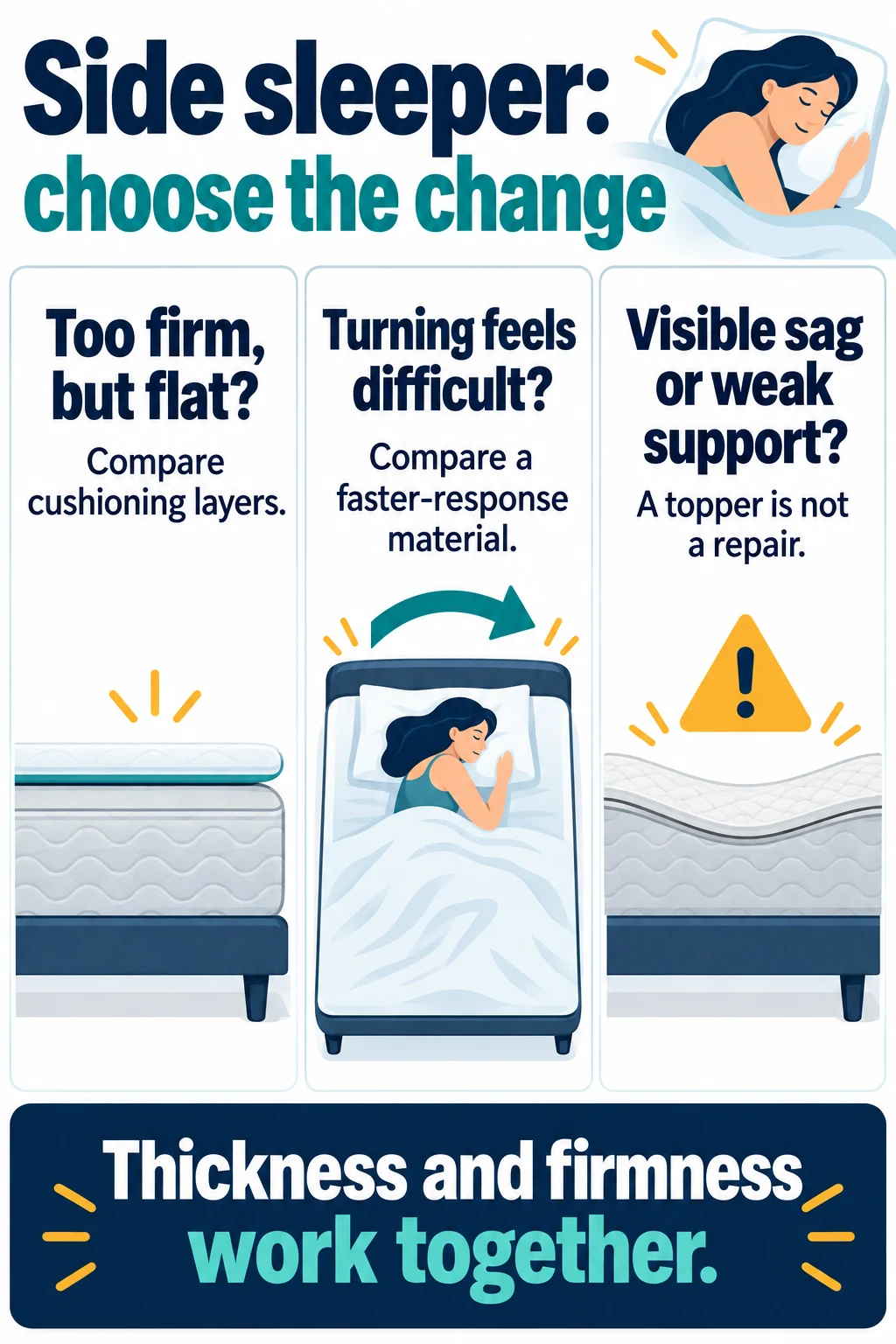
We checked the manufacturer documentation and named U.S. Amazon variants on September 16, 2026. We have not sleep-tested or pressure-mapped these products. Our recommendations connect documented construction to a purchase goal; they are not measured comfort rankings. The featured image and explanatory diagram are AI-generated concepts. The product pictures inside the shopping cards come from the inspected listings.
For the complete material and purchase overview, return to our Amazon topper buying guide.
Shortlist: two clearly different purchases
| Exact reference | Why compare it | Main tradeoff | Inspected Amazon configuration |
|---|---|---|---|
| Pure Green Natural Latex Topper | Softening with a more responsive surface | Springy feel; cover costs extra in this offer | Queen, 2 inches, Soft, no cover |
| Linenspa Gel Memory Foam Topper | A larger plush, slow-contouring change | More sink may make turning or heat comfort worse | Queen, 3 inches, gel memory foam |
Start with the first route if you regularly change sides or dislike the sensation of being held in foam. Start with the second if you specifically enjoy a close contour and the mattress below is much too firm. If you already sink deeply, neither is an automatic fix. Use the topper-or-new-mattress tool to separate a surface adjustment from a replacement decision.
First identify what feels wrong
“Uncomfortable on my side” can describe very different purchases. A flat surface that feels hard at the shoulder is different from a bed whose middle drops away. A topper can change the first surface interaction; it cannot rebuild the second bed's support. Remove bedding, inspect the unloaded mattress and check its supporting frame before spending money on another layer.
Also distinguish difficulty settling from difficulty moving. If you cannot find enough cushioning, a softer layer may be useful. If you settle comfortably but struggle to turn, more slow-recovery foam can make the specific problem worse. Explain the intended change in a sentence: “I want a little more surface give while keeping movement easy” is a better shopping brief than “I need the best topper.”
Pure Green two-inch Soft: the responsive starting point
The Sleep On Latex configurator separates thickness, firmness and cover choices. Its Soft option is intended to soften the surface, while Medium is a different adjustment. The inspected Amazon reference below is specifically the two-inch Soft Queen, not the three-inch Medium option in our general topper guide.
That distinction makes this the more coherent latex starting point for someone whose main complaint is a hard surface. Two inches also adds less height than the three-inch reference. The tradeoff is that the original mattress remains influential: a modest comfort layer may not produce the deep cradle someone expects from memory foam. Latex's quicker response is useful if you value movement, but its springiness is a preference, not a universal improvement.
The Amazon offer states no cover. Include a suitable enclosure or the manufacturer's covering arrangement in your purchase plan, and compare the full stack with your sheet pockets. Buying bare foam because its headline price is lower can be a false comparison against a covered topper. The manufacturer's direct options and return terms are useful alternatives, but they are not automatically the terms of an Amazon order.
Pure Green: Queen, 2-inch Soft
A specific soft-latex route for a sound mattress that needs a responsive cushioning layer. This link is not the three-inch Medium variant.

Before checkout
Use the listing as the source of truth for current price tier, seller, delivery window, and return terms.
ASIN B00UYG8F7U identity checked September 16, 2026. Confirm the selected variant, seller, delivered price and order-specific returns. As an Amazon Associate, we earn from qualifying purchases.
Linenspa three-inch gel foam: choose it for contour, not a cooling promise
Linenspa's product page describes gel-infused memory foam and multiple profiles. Our Amazon reference selects the three-inch Queen. It is the route to compare when you want a substantial plush layer and accept slower recovery as part of that feel.
The important purchase consequence is how much the surface changes. A deeper layer can be appealing on a very firm bed, yet excessive sinking can be unwelcome when turning, sharing the edge or getting up. This is why we do not call three inches automatically superior to two. The gel label also does not establish how cool the complete bed will remain overnight. If overheating is your main complaint, read our passive cooling-topper comparison before choosing more contouring foam.
Linenspa: Queen, 3-inch gel memory foam
Compare this plush foam option when a larger softness change is the goal and you prefer a slow contour to latex response.

Before checkout
Use the listing as the source of truth for current price tier, seller, delivery window, and return terms.
ASIN B07MY34QH7 identity checked September 16, 2026. No independently measured overnight cooling advantage is claimed here. As an Amazon Associate, we earn from qualifying purchases.
Two inches or three: use the bed you own as the reference
The recurring owner question is not simply which material wins, but how much of it to add. A Sleep On Latex owner discussion illustrates that two-versus-three-inch decision. The replies are personal experiences, not a controlled comparison or a sizing rule. Our FAQ therefore addresses thickness together with firmness and the mattress underneath.
| Starting situation | First comparison to make | What would count against the purchase |
|---|---|---|
| Slightly too firm; turning is easy | A smaller softness change | A thicker layer creates an unnecessarily deep cradle |
| Very firm; you want a close hug | Deeper plush foam versus soft latex | Improvement in cushioning comes with unwanted heat or slow movement |
| Already plush; you sink in the middle | Mattress and foundation condition | More softness worsens the original complaint |
| Partners want different changes | Separate compatible layers or a shared compromise | A center step or shifting layers becomes more annoying than the original feel |
Body weight influences how a material compresses, but it does not create a reliable rule such as “everyone over this weight needs three inches.” Shoulder width, preferred posture and the original comfort layers also matter. A lighter sleeper may find a nominally medium topper insufficiently forgiving; a heavier sleeper may dislike how far a very soft layer yields. Compare the resulting bed rather than applying a weight-only chart.
For two sleepers, keep any separate layers consistent with the actual mattress footprint and movement. Two standard Twin pieces do not cover a conventional king's full length. Our split-king guide explains the Twin XL distinction and the limitations of shared covers.
Check the pillow and the fitted layers
When the shoulder settles differently, the pillow that worked before may no longer fill the same space. Give yourself a fair comparison: evaluate the surface change first, then reassess pillow height. Our pillow-loft calculator can organize those inputs; it is not a diagnosis or a substitute for comfort feedback.
Measure mattress plus topper plus protector against the sheet's usable pocket depth. A very tight protector can restrict how the top layer moves, while a loose one may bunch. Check the edge while sitting as well as lying down. Added height affects the whole bed, including how your feet meet the floor when you get up.
Make the trial answer a specific question
Write down the current discomfort, room setup and pillow before opening the topper. After the manufacturer's expansion period, keep the rest of the bedding consistent. Each morning record surface comfort, turning, warmth and shifting. Our sleep-trial diary provides a place to organize observations.
Do not keep adding products because one result is ambiguous. If extra cushioning helps but movement becomes worse, compare a different response or firmness rather than stacking another topper. If no surface arrangement feels stable, revisit the original mattress with the side-sleeper mattress guide.
Before ordering, record the seller and return instructions for the actual item. An expanded topper is a bulky return, and a manufacturer's direct trial does not establish Amazon eligibility. The Amazon return playbook explains the order-specific route. The right purchase is one that improves the intended comfort problem and remains practical to keep, clean and return if necessary.