February 15, 2025

Best Organic Mattresses on Amazon: Latex & Natural Picks

A focused shortlist of Amazon mattresses that use organic textiles, natural latex, and low-VOC builds—plus certifications to verify before you buy.

Why shop organic on Amazon

Clean-material shoppers often worry about off-gassing, chemical odors, or recycled foam fillers. Amazon carries several latex hybrids and natural-fiber builds that lean on organic cotton, wool, and certified latex. The trick is separating marketing fluff from verified specs.

The organic mattress market has grown substantially over the past five years, driven by consumer demand for healthier sleep environments and sustainable manufacturing practices. What was once a niche category dominated by specialty boutique brands has expanded into mainstream retail channels, including Amazon's marketplace. This democratization of access means more competitive pricing and faster shipping, but it also requires buyers to become educated consumers who can identify genuine organic credentials versus greenwashing tactics.

Amazon's advantage lies in its transparent review ecosystem, Prime shipping infrastructure, and generous return policies that reduce the risk of buying a mattress sight-unseen. However, the platform's open marketplace model means anyone can list products with vague eco-claims. Understanding which certifications carry legal weight and which materials genuinely reduce chemical exposure becomes critical for making informed purchases.

The science behind organic sleep surfaces

Traditional mattresses often contain polyurethane foams derived from petroleum, synthetic flame retardants like polybrominated diphenyl ethers, formaldehyde-based adhesives, and polyester covers treated with stain-resistant chemicals. While regulatory bodies set safety thresholds for these substances, sensitive individuals may experience headaches, respiratory irritation, or skin reactions during the initial off-gassing period that can last weeks or months.

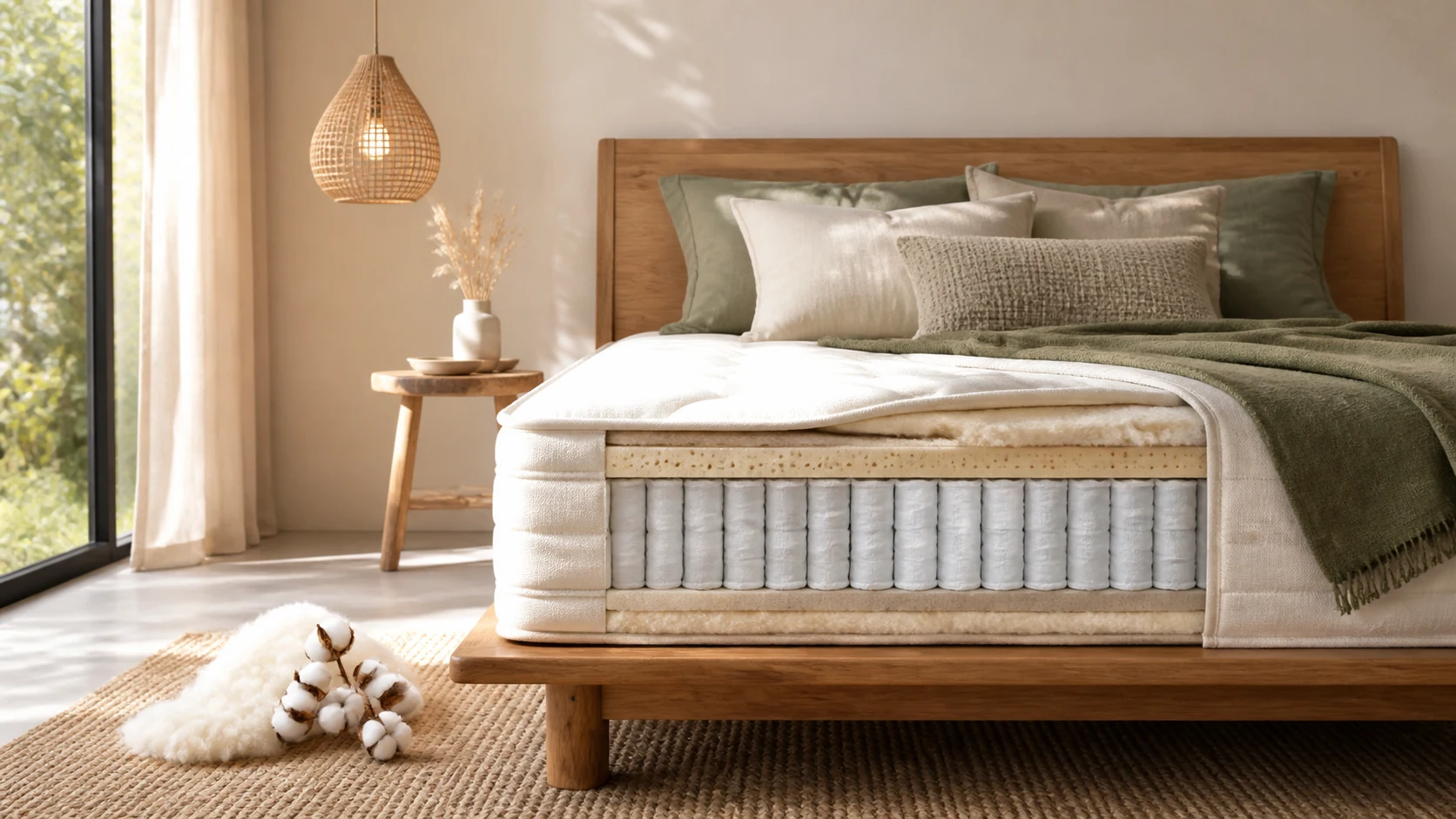
Organic mattresses replace these synthetic components with natural alternatives: plant-based latex harvested from rubber trees, cotton grown without pesticides or synthetic fertilizers, wool processed without harsh chemicals, and natural flame barriers that comply with safety standards without toxic additives. The result is a sleep surface that emits fewer volatile organic compounds, resists dust mites naturally, and biodegrades more readily at end-of-life.

Quick Tip: Natural latex has inherent antimicrobial and dust-mite-resistant properties due to its dense cellular structure, making it ideal for allergy sufferers even without chemical treatments.

Fast picks by use case

Choosing the right organic mattress depends on your sleep style, body type, and specific sensitivities. Here's a detailed breakdown of the most common scenarios and the mattress profiles that address them best.

Buoyant latex hybrid (most sleepers)

Profile: Medium-firm feel with zoned coils, organic cotton cover, and organic wool quilting for natural flame resistance. Great for hot sleepers and couples who move a lot.

Why it works: The combination of responsive latex comfort layers and individually wrapped coils creates a balanced surface that contours without excessive sinkage. The coil system promotes airflow through the mattress core, actively dissipating heat throughout the night. Zoned coil configurations place firmer springs under the lumbar region and softer springs under shoulders and hips, maintaining spinal alignment across different sleep positions.

Ideal for: Back sleepers (130–230 lbs), combination sleepers who change positions frequently, couples with different body types, hot sleepers who overheat on memory foam, those recovering from back pain who need consistent support without pressure point discomfort.

Weight capacity: Most latex hybrids perform optimally up to 250 lbs per sleeper; heavier individuals should confirm edge support specifications and perimeter foam densities exceed 2.0 lb/ft³.

All-latex purist

Profile: Solid or layered natural latex core (medium or firm), GOLS certification, cotton/wool cover. Excellent durability and edge consistency if the base latex density is 4 lb/ft³ or higher.

Why it works: Eliminating coils and synthetic foams creates the most chemically minimal sleep surface available. All-latex construction distributes weight evenly across the entire mattress, reducing motion transfer between partners and eliminating the squeaking or sagging issues that can develop in coil systems over time. Latex's natural elasticity maintains its shape for 12–20 years, far exceeding the 7–10 year lifespan of typical polyurethane foam beds.

Ideal for: Side sleepers who need consistent pressure relief, eco-purists prioritizing zero off-gassing, buyers seeking maximum longevity and resale value, those with severe chemical sensitivities who react to even low-VOC foams.

Firmness strategy: Layer configurations matter significantly. A common setup uses 3 inches of softer latex (ILD 19–24) over 6 inches of firmer latex (ILD 32–40) for balanced contouring and support. Single-firmness all-latex beds work best for stomach sleepers or buyers over 230 lbs who need consistent firmness throughout.

Pressure relief first

Profile: Latex hybrid with a plush Euro top that blends softer natural latex over coils; keeps hips cushioned without the stuck-in-the-bed feel of memory foam.

Why it works: Side sleepers and lighter individuals (under 150 lbs) often struggle with the firmer surface tension of standard latex hybrids. A plush Euro top adds 2–3 inches of lower-ILD latex that conforms more deeply to shoulder and hip curves, reducing pressure point concentration. The coil base prevents the full-body hug that many side sleepers dislike about memory foam, maintaining easier repositioning throughout the night.

Ideal for: Side sleepers (under 200 lbs), those with shoulder or hip pain, petite sleepers who feel "on top" of firmer mattresses, pregnant women who need accommodating pressure relief without feeling trapped.

Motion isolation note: The plush comfort layer absorbs more partner movement than firmer latex hybrids, though still not matching memory foam's isolation capabilities. Couples should consider split king configurations if motion transfer is a primary concern.

Eco on a budget

Profile: Latex-over-foam hybrids that use certified latex on top of high-density support foam. Confirm foam densities (1.8 lb/ft³+ base) and a cotton cover to avoid plasticky sleep surfaces.

Why it works: Entry-level organic mattresses reduce costs by limiting natural latex to the top comfort layer where body contact occurs, while using CertiPUR-US certified polyfoam for the deeper support layers. This hybrid approach eliminates the most problematic off-gassing sources (cheap foams, polyester covers) while keeping prices accessible for first-time organic buyers or guest room applications.

Ideal for: Budget-conscious shoppers, college students, rental properties, trial runs before committing to full latex construction, guest bedrooms with intermittent use.

Durability trade-off: Expect 6–10 years of useful life versus 12–20 for all-latex models. The foam base will soften and develop impressions faster than latex, but the mattress should remain supportable and chemical-free throughout its lifespan if base foam density meets minimum thresholds.

Mattress TypePrice RangeLifespanBest For
Latex Hybrid$1,200–$2,50012–15 yearsHot sleepers, couples, combination sleepers
All-Latex$1,800–$3,50015–20 yearsSide sleepers, eco-purists, chemical-sensitive
Plush Latex Hybrid$1,400–$2,80010–14 yearsSide sleepers, lighter weights, pressure relief
Latex-Over-Foam$700–$1,4006–10 yearsBudget buyers, guest rooms, trial purchases

Spec and certification guardrails

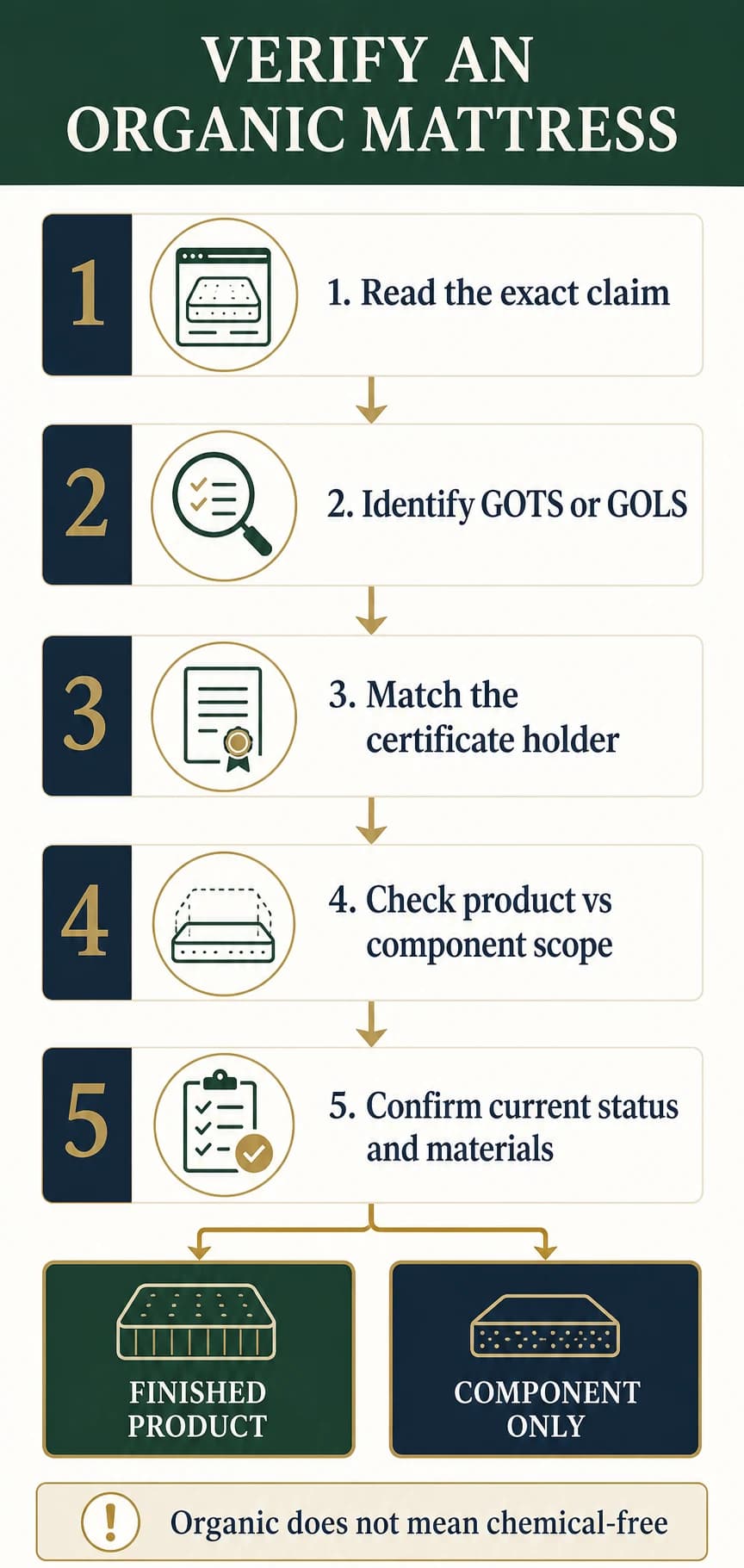
Navigating organic mattress specifications requires understanding both material composition and third-party verification systems. Marketing terms like "natural," "eco-friendly," and "non-toxic" carry no legal definitions in mattress labeling, making independent certifications your primary tool for validation.

Cover materials decoded

Organic cotton: Must be certified to GOTS standards, which prohibit synthetic pesticides, genetically modified seeds, and harmful processing chemicals. GOTS cotton feels softer and breathes better than conventional cotton because it avoids formaldehyde-based anti-wrinkle treatments. Look for specific language like "100% GOTS organic cotton" versus vague "organic blend" claims that may contain only 5–10% certified fibers.

Organic wool: GOTS-certified wool comes from farms meeting animal welfare standards and avoiding synthetic pesticides in grazing lands. Wool naturally wicks moisture, regulates temperature across seasons, and provides flame resistance without chemical additives. A typical organic mattress uses 1–2 lbs of wool per square foot as a fire barrier layer under the cover.

Avoid: Heavy polyester knits that trap heat, rayon/polyester blends marketed as "bamboo" (bamboo requires harsh chemical processing to become fabric), vinyl or polyurethane waterproof layers directly under the sleeping surface (creates a vapor barrier that prevents breathability).

Warning: Some sellers list "organic cotton cover" when only the top panel is organic while sides and bottom use polyester. Request full cover composition breakdowns before purchase.

Fire barrier solutions

Federal flammability standards (16 CFR 1633) require mattresses to withstand open flame exposure without catastrophic burning. Traditional mattresses achieve this with chemical flame retardants that have raised health concerns. Organic alternatives include:

Wool layer: The gold standard for natural fire barriers. Wool's high nitrogen and water content makes it naturally flame-resistant and self-extinguishing. It adds softness while meeting regulations without chemicals.

Rayon/silica blend: Some organic mattresses use a thin layer of rayon treated with silica (sand-derived) instead of brominated chemicals. While not fully natural, it's significantly less toxic than conventional flame retardants.

Hydrated silica sock: A thin fabric barrier treated with food-grade silica that encases the entire mattress. Effective but can add a slight stiffness to the feel.

Avoid: Boric acid treatments (irritating to respiratory systems), antimony trioxide (heavy metal), PBDE flame retardants (linked to thyroid disruption), any mattress that doesn't disclose its fire barrier method.

Comfort layer specifications

Natural latex types:

  • Dunlop process: Denser, more consistent firmness throughout; better for support layers and firm comfort preferences; slightly less responsive bounce
  • Talalay process: Lighter, more buoyant feel; better for soft/medium comfort layers; more expensive to produce; airier cell structure enhances breathability

GOLS certification: Global Organic Latex Standard verifies at least 95% organic latex content (some water and minimal processing agents make 100% impossible). It prohibits harmful chemicals in harvesting and manufacturing while requiring sustainable forestry practices.

ILD ranges explained:

ILD RangeFeelBest ApplicationSleeper Weight
14–19Very SoftPillow top, shoulder zoneUnder 130 lbs
20–24SoftSide sleeper comfort layer130–150 lbs
25–29MediumUniversal comfort layer150–200 lbs
30–34Medium-FirmBack sleeper comfort, transition layer180–230 lbs
35–40FirmStomach sleeper comfort, support coreOver 200 lbs
40+Extra FirmBase layers, heavy individualsOver 250 lbs

Density requirements: Latex density should be 4.0–5.5 lb/ft³ for longevity. Lower densities compress faster and lose responsiveness within 3–5 years. Higher densities above 6 lb/ft³ feel too rigid for most comfort applications.

Support system criteria

Zoned coil specifications:

  • Gauge: 13–15 gauge steel provides best balance; lower numbers (12 gauge) are firmer, higher numbers (16 gauge) are softer
  • Coil count: 800–1200 coils in a queen size; more isn't always better if gauge is wrong
  • Zoning patterns: 3-zone (head/torso/legs) or 5-zone (head/shoulders/lumbar/hips/legs) configurations
  • Edge support: Perimeter foam encasement of at least 2.0 lb/ft³ density prevents roll-off

Dense foam cores (all-latex alternatives):

  • Base foam density: Minimum 1.8 lb/ft³ for polyfoam support layers; 2.0+ lb/ft³ preferred for longevity
  • Latex base layers: 35+ ILD with 4.5+ lb/ft³ density for proper support
  • Thickness: 6–8 inches of support material needed for adequate weight distribution

Perimeter reinforcement: Edge support matters significantly for couples who use the full mattress surface, intimate activities, and sitting on the bed's edge while dressing. Look for reinforced perimeter coils or high-density foam rails extending 4–6 inches from all edges.

Third-party certification hierarchy

Understanding certification priority helps you allocate budget effectively when some compromises are necessary:

Tier 1 (Essential):

  1. GOLS (Global Organic Latex Standard): Verifies organic latex content and sustainable harvesting
  2. GOTS (Global Organic Textile Standard): Covers organic cotton and wool with strict chemical restrictions
  3. Greenguard Gold or Eco-INSTITUT: Measures VOC emissions; critical for chemical-sensitive individuals

Tier 2 (Important):

  1. OEKO-TEX Standard 100: Tests finished textiles for harmful substances but doesn't verify organic growing methods
  2. CertiPUR-US: If mattress contains polyfoam layers, ensures they're free from ozone depleters, flame retardants, mercury, lead, formaldehyde, and phthalates

Tier 3 (Nice to have):

  1. FSC Certification: Validates sustainably sourced wood in platform beds or foundations
  2. Rainforest Alliance: Confirms latex comes from responsibly managed plantations
  3. Carbon Neutral: Company offsets manufacturing emissions

Red flags: Be skeptical of unverifiable proprietary certifications, "certified by our internal lab" claims, or certificates that can't be independently confirmed on the certifying organization's website.

Pro Tip: Request certification documents before purchase. Legitimate brands provide PDF certificates showing batch numbers, test dates, and scope of certification. If a seller can't produce these within 48 hours, consider it a major warning sign.

Setup, odors, and returns

The first 30 days with a new organic mattress set the stage for years of comfortable sleep. Following proper setup and break-in procedures ensures you accurately evaluate the mattress during the return window while protecting your investment long-term.

Unboxing and ventilation protocol

Day 1 - Initial expansion:

  1. Unbox in the room where the mattress will live; moving compressed latex is difficult and risks tears
  2. Use scissors to cut plastic carefully along seams; latex edges are heavier than foam and can pinch fingers
  3. Let mattress expand fully (2–4 hours for latex hybrids, 6–12 hours for all-latex models)
  4. Open windows and run a fan for 12–24 hours to dissipate earthy rubber smell

Why latex smells different: Natural latex emits a mild rubber or vanilla-like scent from residual proteins and natural compounds—completely different from the chemical solvent smell of polyurethane foam. The odor is strongest in Talalay latex due to its washing process. It's non-toxic but can be noticeable for sensitive noses during the first few days.

Sensitive sleeper protocol: If you have severe chemical sensitivities, air the mattress for 48–72 hours in a garage or spare room before moving it to your bedroom. Using an air purifier with activated carbon filtration near the mattress accelerates odor dissipation.

Foundation and support requirements

Platform bed specifications:

  • Slat spacing: No more than 3 inches apart; latex is heavy (80–150 lbs for a queen) and unsupported sections will sag permanently
  • Slat thickness: Minimum 0.75 inches thick; 1 inch preferred for durability
  • Center support: Queen and larger sizes need a center support beam to prevent frame bowing

Box spring compatibility: Traditional box springs work with latex hybrids but are unnecessary expense. Latex needs rigid support, not additional cushioning. If you have a box spring, place a bunkie board (thin plywood platform) on top before adding the mattress.

Adjustable base considerations: Most latex hybrids work on adjustable bases if the latex comfort layer is 3 inches or less (thicker latex resists bending). All-latex mattresses can crack if flexed repeatedly beyond 30-degree angles. Confirm manufacturer approval before using with adjustable frames.

Foundation checklist:

  • ✓ Rigid, non-flexing surface
  • ✓ Slats no more than 3 inches apart
  • ✓ Center support for queen sizes and larger
  • ✓ Adequate airflow underneath (4–6 inches clearance)
  • ✓ Weight capacity exceeds mattress plus sleepers

Mattress protection essentials

Day one protector addition: Organic mattresses need protection just like conventional ones. Body oils, sweat, and skin cells accumulate on the cover surface, eventually creating odor and staining that voids warranties. However, choosing the wrong protector negates the breathability benefits you paid for.

Protector material priority:

  1. Organic cotton terry: Most breathable; uses natural cotton loops; machine washable; no waterproofing but blocks allergens and extends cover life
  2. Cotton with PU laminate: Waterproof barrier on bottom; breathable top surface; good compromise for families with children or pets
  3. Tencel/Lyocell membrane: Plant-based waterproof layer; excellent breathability; premium price
  4. Avoid: Vinyl, PVC, thick polyester quilted protectors that create heat-trapping vapor barriers

Fit specifications: Ensure protector pockets are deep enough (14–16 inches for most organic mattresses including the foundation height). Too-shallow protectors pop off corners and bunch during sleep.

Break-in period expectations

Weeks 1–2: Latex feels firmer than expected as your body adjusts to the fast-responding surface. Combination sleepers may initially wake more frequently as movement patterns adapt. Hip and shoulder soreness is common for side sleepers transitioning from memory foam.

Weeks 3–4: Comfort layers soften slightly (0.5–1 ILD reduction) as latex cells compress with body heat and weight. Sleep position changes become smoother. Temperature regulation stabilizes as wool layers compress and breathability optimizes.

Months 2–3: Final break-in complete. Surface impressions are normal (0.75–1.5 inches is typical and doesn't indicate defect). Mattress performs at its intended firmness level.

Return window strategy: Most Amazon sellers offer 100-night trials. Evaluate at the 30-day mark (after initial break-in) and again at 80 days. This gives you two data points while leaving time to initiate returns if needed.

Rotation and maintenance schedule

First year (quarterly rotation):

  • Month 3: Rotate 180 degrees (head to foot)
  • Month 6: Rotate 180 degrees
  • Month 9: Rotate 180 degrees
  • Month 12: Rotate 180 degrees

Years 2+: Rotate every 6 months. Latex doesn't require flipping unless manufacturer specifically designs a dual-sided model (rare).

Why rotation matters: Even weight distribution prevents permanent body impressions in comfort layers. Latex impressions are less severe than memory foam but still develop in high-pressure zones (hips, shoulders) without rotation.

Cleaning protocol:

  • Monthly: Vacuum surface with upholstery attachment to remove dust, skin cells, and allergens
  • Quarterly: Spot-clean stains with mild soap and cold water; blot dry completely before making bed
  • Annually: Remove protector and air mattress without sheets for 4–6 hours to refresh materials
  • Never: Use harsh chemicals, saturate the mattress with water, or steam-clean (heat damages latex)

Return and exchange navigation

Screenshot everything: Amazon listings change frequently. Before purchase, capture screenshots of:

  • Full product description with material specifications
  • Certification claims and certificate images
  • Warranty terms and trial period details
  • Seller contact information and response commitments

Return condition requirements: Most organic mattress sellers require:

  • Original packaging isn't necessary (latex can't recompress) but save the plastic for possible returns
  • Clean, unstained condition (protectors protect this)
  • No structural damage (tears, burns, frame damage)
  • Return initiated within trial window (usually 100 nights)

If listing changes post-purchase: Your screenshots establish the terms under which you bought. Amazon's A-to-Z Guarantee protects against sellers who modify specifications after sale. Escalate to Amazon customer service with screenshot evidence if seller disputes return based on changed listing.

Partial refund negotiations: If you like the mattress but it's slightly too firm or soft, some sellers offer partial refunds for adding a topper or exchanging the comfort layer rather than full returns. This can be more convenient than shipping a heavy mattress back.

TimelineActionPurpose
Pre-PurchaseScreenshot all specifications and certificationsDocumentation for returns if listing changes
Day 1Unbox, inspect, air out 12–24 hoursAllow full expansion and odor dissipation
Day 2Add protector, begin sleepingProtect cover while evaluating comfort
Days 30–40First comfort evaluationAssess after break-in period
Days 80–90Final evaluation before trial endsConfirm comfort or initiate return
Month 3First rotation (180 degrees)Even out wear patterns
OngoingRotate quarterly first year, bi-annually afterMaximize longevity

Who an organic mattress helps most

Understanding whether an organic mattress addresses your specific sleep challenges helps justify the premium cost and ensures you choose features that deliver measurable benefits rather than paying for marketing.

Hot sleepers and temperature regulation

Why organic helps: Natural latex has an open-cell structure that allows air to circulate through the material rather than trapping heat like dense memory foam. Organic cotton covers breathe significantly better than polyester knits, allowing heat and moisture vapor to escape rather than reflecting back to your body. Wool naturally wicks perspiration away from skin and releases it into the air, creating a temperature-neutral sleep environment.

Specific indicators you'll benefit:

  • You wake up sweating on memory foam or polyester-topped mattresses
  • You keep bedroom temperature below 68°F year-round
  • You use cooling pillows, mattress pads, or weighted blankets specifically designed for hot sleepers
  • You're experiencing hormonal changes (menopause, andropause) causing night sweats

Optimal configuration: Latex hybrid with breathable organic cotton cover, minimal quilting, and zoned coil base (promotes maximum airflow). Avoid Euro tops or thick pillow tops that add insulating layers.

Combination sleepers needing responsive surfaces

Why organic helps: Latex's natural elasticity means it springs back to its original shape within 2–3 seconds after you move, compared to 10–30 seconds for memory foam. This fast response makes it easier to shift from back to side to stomach positions without feeling stuck. The buoyant surface lift prevents the sensation of sleeping "in" the mattress rather than "on" it.

Specific indicators you'll benefit:

  • You change positions 15+ times per night
  • You wake with stiffness or pain from being stuck in one position too long
  • You're an active sleeper who feels trapped by memory foam's slow response
  • You need to get in and out of bed multiple times nightly (bathroom trips, childcare)

Optimal configuration: Medium-firm latex hybrid (ILD 28–32 comfort layer) with good edge support for easy sitting transitions. Avoid ultra-plush tops that allow excessive sinkage.

Buyers sensitive to synthetic odors and chemicals

Why organic helps: Off-gassing occurs when volatile organic compounds (VOCs) trapped in foam and adhesives during manufacturing release into the air as the mattress warms. Organic mattresses minimize these VOCs by using water-based adhesives, natural latex with minimal processing chemicals, and untreated natural fibers. Greenguard Gold certification requires emissions testing to verify low VOC levels.

Specific indicators you'll benefit:

  • You've experienced headaches, nausea, or respiratory irritation with new conventional mattresses
  • You have asthma, allergies, or multiple chemical sensitivity
  • You can smell "new car" or chemical odors that others don't notice
  • You're pregnant and more sensitive to environmental chemicals

Optimal configuration: All-latex mattress with GOLS certification, GOTS organic cotton/wool cover, and Greenguard Gold emissions testing. Avoid latex-over-foam hybrids where you'll still encounter some polyurethane off-gassing.

Important: If you have a latex allergy (distinct from chemical sensitivity), organic latex mattresses are not safe options. Latex proteins can cause allergic reactions even in natural forms. Consider organic cotton/wool mattresses with coil or plant-based foam cores instead.

Eco-minded shoppers valuing sustainable materials

Why organic helps: Conventional mattresses rely on petroleum-based polyurethane foams that require significant fossil fuel inputs and emit greenhouse gases

Ready to test a new mattress?

Compare prices and availability directly on Amazon. Many of our featured mattresses offer generous trials and fast delivery.

Shop mattresses on Amazon

Deep-dive pillars to bookmark

Every blog article connects back to our long-form pillars so you can zoom out, compare specs, and share printable checklists with anyone helping you shop.

Frequently asked questions

Which certifications matter most for organic mattresses?

Prioritize GOLS for latex, GOTS for cotton and wool, and Greenguard Gold or Eco-INSTITUT for low emissions. OEKO-TEX Standard 100 is a textile safety baseline but not an organic certification by itself.

Do organic mattresses still need a protector?

Yes. A thin, breathable protector keeps sweat and spills off the cover, prevents odor absorption, and preserves warranty eligibility without changing the latex feel.

Will latex feel different than memory foam?

Latex is buoyant and fast-responding with more surface lift. It is great for combination sleepers and hot sleepers who dislike the slow sink of memory foam.

Related reading